10 Regional Japanese Dishes Worth Traveling For
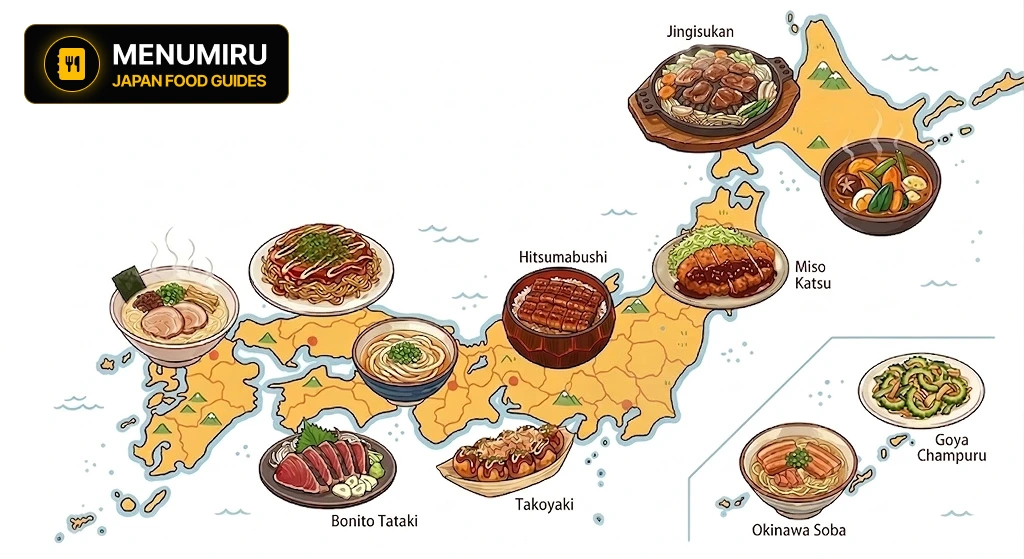
Japanese cuisine is far more than sushi and ramen. Behind these familiar names lies an incredible gastronomic diversity: each of Japan's 47 prefectures has dishes that simply can't be experienced in their true form anywhere outside their region of origin. Isolated mountain valleys, proximity to the sea, and unique climatic conditions — all of these have shaped distinct culinary traditions over centuries, reflecting the history, culture, and character of each place.
This article is the first in a series dedicated to regional Japanese cuisine. We've selected 10 dishes from different corners of Japan that you absolutely must try where they were born. For each dish, we've found the best restaurants with real reviews and ratings.
1. 🍜 Hakata Ramen (博多ラーメン) — Fukuoka, Kyushu
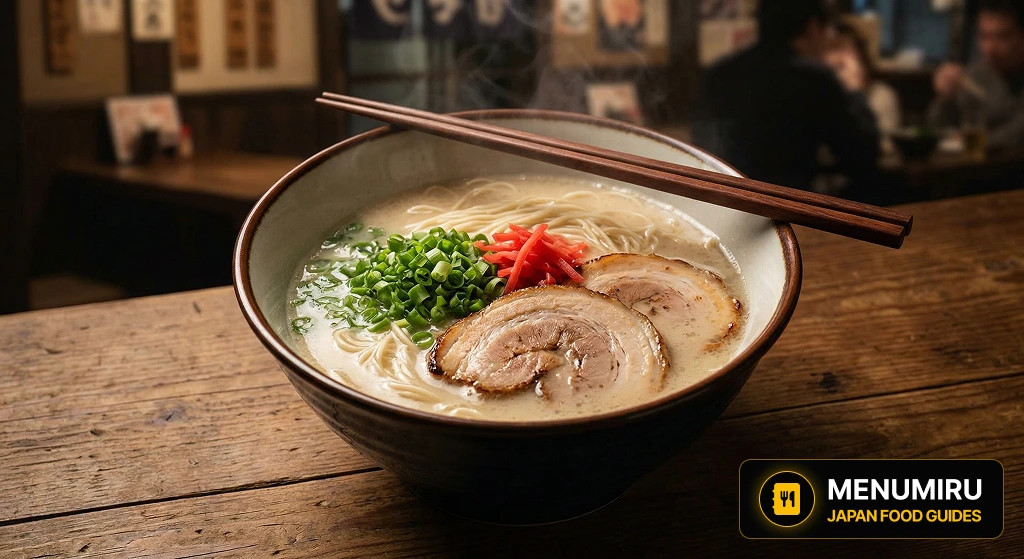
Region: Fukuoka Prefecture · Season: Year-round
Fukuoka is to ramen what New York is to pizza. If you think you've tried tonkotsu ramen, come to the Hakata district — and you'll understand the difference between good and great.
What it is. Hakata ramen features thin, straight noodles in a thick, milky-white pork bone broth (tonkotsu). The bones are simmered for 12 to 20 hours until they break down, creating an incredibly rich, creamy soup. Topped with sliced chashu pork, green onions, and sometimes pickled ginger.
Why here. The history of Hakata ramen dates back to 1937, when a yatai (food cart) owner near the port of Hakata began feeding fishermen and dock workers with a quick, hot soup. This is why the noodles are ultra-thin — they cook in mere seconds. The "kaedama" system (替え玉), where you can order an extra serving of noodles while the broth is still hot, was also born here.
How to eat it right. When ordering, you'll be asked to choose your noodle firmness: yawarame (soft), futsu (regular), katame (firm), or bari-kata (very firm). Locals go for katame or bari-kata. When the noodles are gone but the broth remains — order kaedama.
Pro tip. Try ramen at a yatai in the Tenjin or Nakasu districts. Over 100 food carts operate in the evenings — a unique experience found only in Fukuoka.
Where to eat
Hakata Issou (博多一双) — Main Branch A small restaurant near Hakata Station with a signature "frothy" broth — droplets of fat create a cappuccino-like texture on the surface. Beneath this foam lies a rich, deep pork broth. The menu is ultra-minimal — just ramen and toppings. Google rating: 4.0 (6,700+ reviews). Price: from ¥890. Open 11:00 AM–midnight daily. Address: 3-1-6 Hakataekihigashi, Hakata-ku.
Shin Shin (博多らーめん ShinShin) The founder spent over 10 years training at yatai before opening his own place. The broth here is slightly lighter than classic tonkotsu, but with no loss of flavor. Conveniently located in the Tenjin area and at Hakata Station. Great option for a late dinner — open until late.
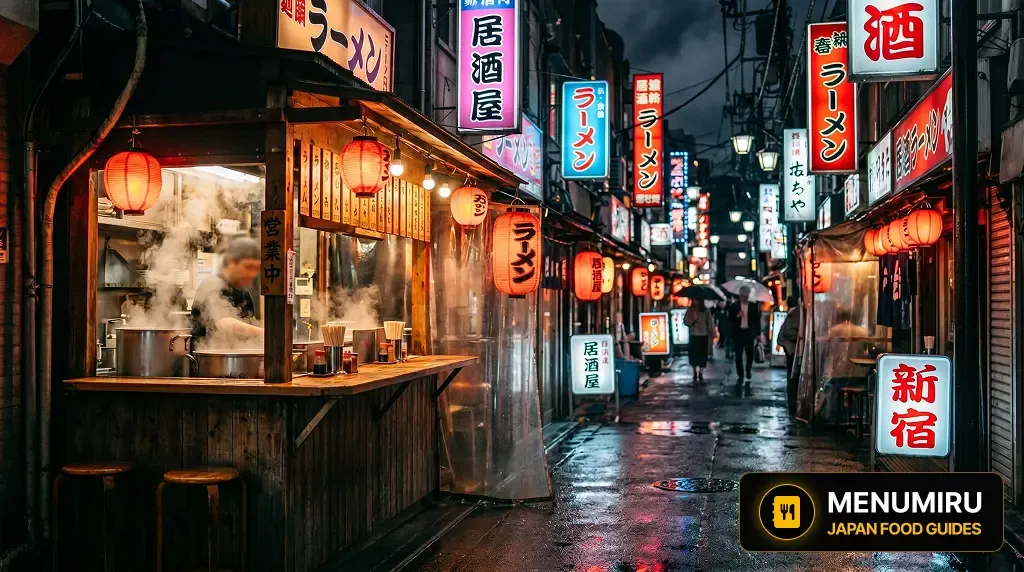
Yatai ramen in Nakasu For full cultural immersion — choose one of the yatai along the Naka River embankment. Ramen by lantern light at a mobile cart, surrounded by locals — an unforgettable experience. Try Nagahama Tomochan or Donryu.
2. 🥞 Hiroshima-Style Okonomiyaki (広島風お好み焼き) — Hiroshima
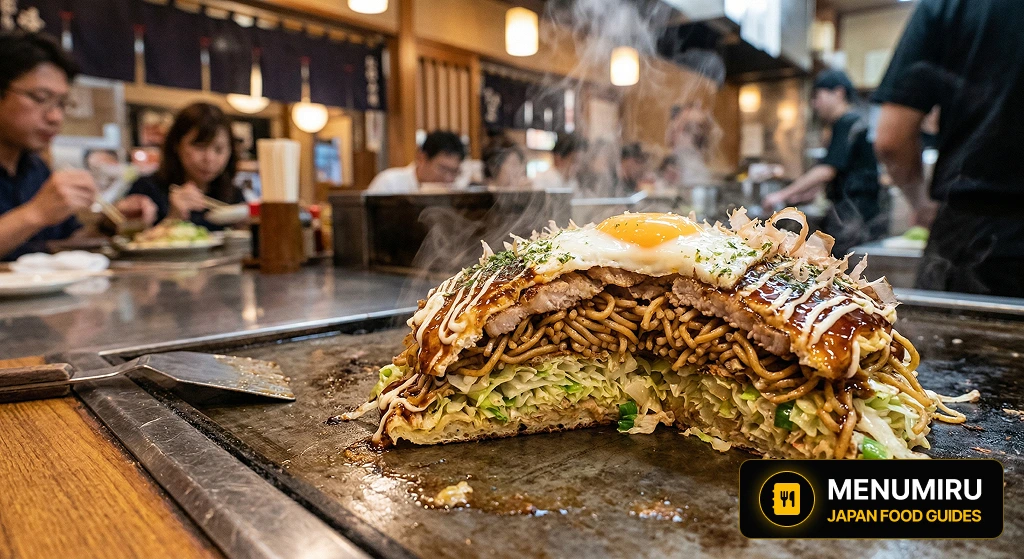
Region: Hiroshima Prefecture · Season: Year-round
There's an eternal debate between Osaka and Hiroshima over whose okonomiyaki is better. But the Hiroshima version is an entirely different dish, and if you haven't tried it on location, you haven't tried it at all.
What it is. Unlike the Osaka style (where all ingredients are mixed into the batter), Hiroshima-style okonomiyaki is built in layers: a thin crepe of batter, a mountain of shredded cabbage (3–4 times more than in Osaka), bean sprouts, pork, yakisoba or udon noodles, and an egg on top. Everything is pressed on the teppan (flat grill), flipped, and drizzled with the sweet Otafuku sauce — Hiroshima's famous okonomiyaki sauce.
Why here. Hiroshima-style okonomiyaki was born in the postwar years as the city rebuilt from ruins. Residents added whatever they could find — cabbage, noodles, scraps of food — to create a filling and affordable dish. Today, Hiroshima has over 1,600 okonomiyaki restaurants — it's the true "holy land" of this dish.
How to eat it right. Locals eat okonomiyaki straight from the teppan, cutting pieces with a small spatula (kote), without transferring it to a plate. The traditional choice is with soba noodles, but try it with udon for a heartier version.
Where to eat
Nagata-ya (長田屋) Located across a pedestrian bridge from the Peace Memorial Park — the perfect spot after visiting the museum. Google rating: 4.4 (3,200+ reviews). The signature sauce was developed in collaboration with Otafuku Sauce exclusively for this restaurant. Vegetarian and vegan options available. Price: from ¥900. Closed Tuesdays and Wednesdays. Address: 1-7-19 Otemachi, Naka-ku.
Yagenbori Hassho (薬研堀 八昌) Considered the true "school" of Hiroshima okonomiyaki — many of the chef's apprentices have opened their own restaurants across the city. Organic cabbage, crispy fried noodles, flawlessly thin batter. Holds a Michelin Bib Gourmand award and Tabelog Hyakumeiten status. Opens at 4:00 PM and closes early when ingredients run out — arrive at opening time!
Okonomimura (お好み村) — "Okonomiyaki Village" An entire complex of 20 okonomiyaki restaurants spread across several floors of a building in the city center. Each restaurant has its own style and specialty. A great place to compare different variations in a single visit. Address: 5-13 Shin-Tenchi, Naka-ku. Near the Hatchobori tram stop.
3. 🍖 Jingisukan (ジンギスカン) — Sapporo, Hokkaido
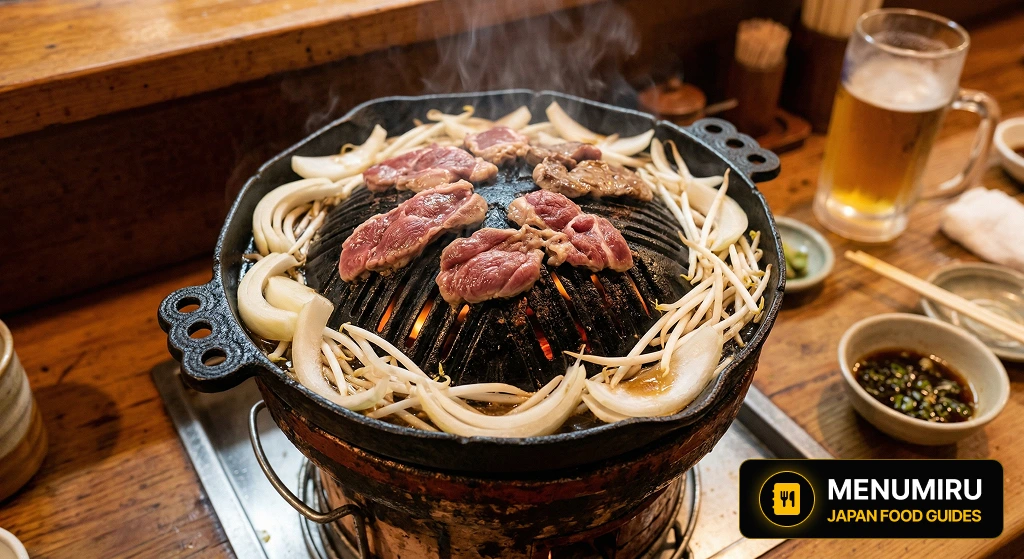
Region: Hokkaido · Season: Year-round (especially great in winter)
Jingisukan — "Genghis Khan" — is the soul of Hokkaido. The name references the great Mongol conqueror, and the special domed grill resembles the helmets worn by his warriors.
What it is. Lamb (young lamb or mutton) that you grill yourself on a special dome-shaped cast-iron skillet. Meat goes on the raised center, while vegetables (onions, bean sprouts, kabocha squash) go around the edges, where they stew in the dripping juices and sauce. After the meat, many restaurants offer "shime" — a finishing course where udon, ramen, or tea is added to the remaining sauce.
Why here. Hokkaido is the only place in Japan where lamb became an everyday food. Sheep were once raised here for wool, and when demand for wool declined, the meat became the foundation for new dishes. Today, 99.5% of lamb in Japan is imported, but some Hokkaido farms raise the elite Suffolk breed, known as the "king of meat sheep."
Two styles. Takikawa style: the meat is pre-marinated in sauce. Sapporo style: raw meat is grilled and dipped in sauce afterward. Each restaurant has its own signature sauce — it's a point of pride.
Where to eat
Jingisukan Daruma (ジンギスカン だるま) — Main Branch An iconic spot in the Susukino district, operating since 1954. Fresh lamb arrives daily and is cut just before opening. The signature sauce hasn't changed since the day it was founded. Google rating: 4.0 (3,000+ reviews). Expect a 1–2 hour wait during peak times. The 4·4 branch opens for lunch and has shorter queues. Main branch address: Minami 5, Nishi 4, Chuo-ku. Open 5:00 PM–5:00 AM.
Sapporo Beer Garden (サッポロビール園) For the complete Hokkaido experience: jingisukan + fresh Sapporo beer in the historic brick building of a former brewery. The red star on the brick chimney is one of Sapporo's symbols. Spacious hall, beer-hall atmosphere — perfect for groups.
Shepherd's Restaurant Itadakimasu A unique place: the owner started his own sheep farm specifically for his restaurant. Only Hokkaido-raised Suffolk is served — a rarity in a country where nearly all lamb is imported. For true connoisseurs.
4. 🍝 Sanuki Udon (讃岐うどん) — Kagawa, Shikoku
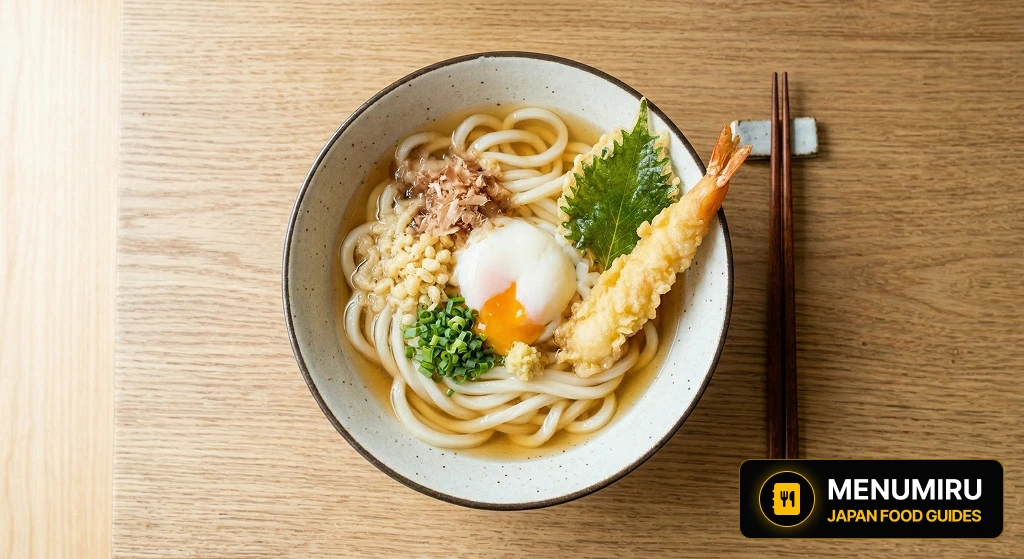
Region: Kagawa Prefecture · Season: Year-round
Kagawa — Japan's smallest prefecture — has made udon its religion. It officially calls itself "Udon-ken" (Udon Prefecture), and tourists travel here specifically for the noodles.
What it is. Sanuki udon is thick, square-cut, incredibly springy wheat noodles with a distinctive "chewy" texture. Made from flour, water, and salt, but the result depends on the skill of the kneading — the dough is worked and rolled repeatedly, sometimes even by foot. Served in hot broth (kake udon), cold with a dipping sauce (zaru udon), or freshly boiled with a raw egg (kamatama udon).
Why here. Kagawa has over 700 udon restaurants — the highest concentration per capita in all of Japan. Many residents eat udon every day, and some several times a day. On New Year's Eve, when all of Japan eats buckwheat soba, Kagawa residents eat udon. A bowl here starts at just ¥200–300 — the most affordable delicacy in the country.
Three types of restaurants. "General" (standard table-service ordering), "self" (cafeteria-style self-service — grab a tray, choose your udon and tempura), and "udon factory" (at noodle production sites, where noodles are made right before your eyes). The most authentic and cheapest are the self-service restaurants.
Where to eat
Yamagoe Udon (山越うどん) A legendary spot with 60 years of history, one of the most famous in the region. This is where kamatama udon was invented — freshly boiled noodles with a raw egg and sauce. Google rating: 4.3 (5,300+ reviews). Open only 9:00 AM to 1:30 PM, closed Wednesdays and Sundays. Located in the town of Ayagawa — a car or taxi is needed.
Sanuki Udon Gamou (がもううどん) According to Tabelog — the most popular sanuki udon restaurant in all of Japan. The queue of visitors from across the country speaks for itself. Small portions, tiny prices — perfect for an "udon marathon" (visiting multiple places in one day).
Udon Baka Ichidai (うどんバカ一代) A photogenic spot famous for butter kamatama udon — where hot noodles are mixed with egg and butter right before your eyes, creating a "Japanese carbonara." The walls are covered with celebrity autographs.
5. 🐡 Hitsumabushi (ひつまぶし) — Nagoya, Aichi
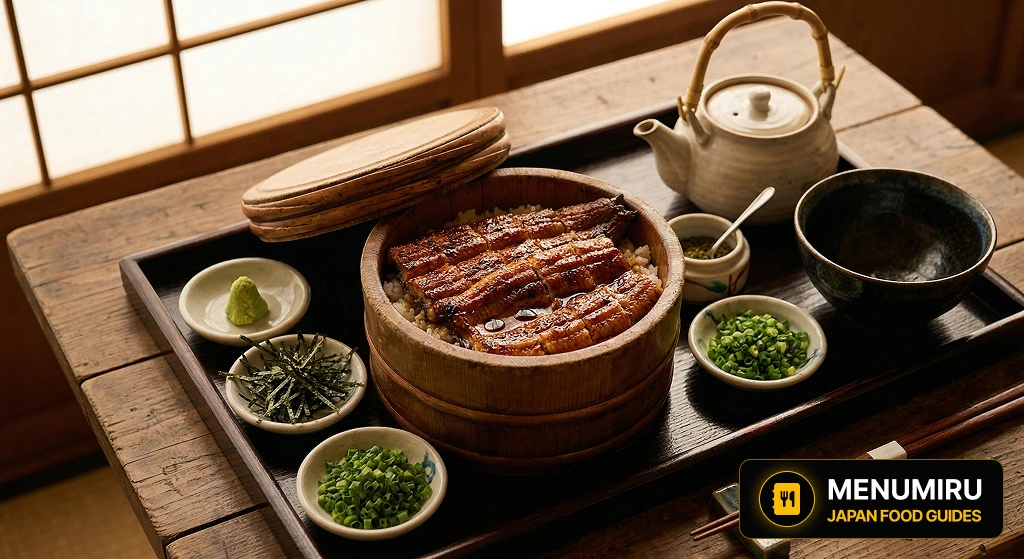
Region: Nagoya, Aichi Prefecture · Season: Year-round (peak season — summer, "Day of the Ox")
Nagoya is a city with its own gastronomic universe called "Nagoya-meshi," and hitsumabushi is its crown jewel.
What it is. Eel (unagi) sliced into thin strips, grilled over charcoal and coated in a sweet-savory tare sauce, served over rice in a wooden tub (ohitsu). But the main event is the ritual of four-step eating.
Four ways to eat hitsumabushi. The rice and eel are divided into four portions. The first portion is eaten as-is, savoring the flavor of eel and rice. The second — with condiments: wasabi, green onion, nori, sansho pepper. The third — poured over with dashi or tea, transforming the dish into chazuke. The fourth — whichever way you liked best.
Why here. Nagoya's style of preparing eel differs from Tokyo's. Here, the eel is not steamed before grilling — it goes straight on the charcoal, resulting in crispier skin and a more intense aroma. The thin slicing is also a Nagoya signature.
Where to eat
Atsuta Houraiken (あつた蓬莱軒) — Main Branch The birthplace of hitsumabushi, established in 1873 in the temple district near Atsuta Jingu Shrine. Google rating: 4.5 (7,400+ reviews). They use large "ao-unagi" — eel that is 30% bigger than standard, rich in fat and intense umami. The secret sauce has been passed down through generations for over 150 years. Expect a 1.5–2 hour wait — put your name down and take a walk around Atsuta Shrine. Price: from ¥3,990. Address: 503 Godocho, Atsuta-ku. Closed Wednesdays and Thursdays.
Shirakawa Joshin (しら河 浄心本店) Another historic restaurant featured in the Michelin Guide. Aromatic secret sauce, perfect grilling — crispy on the outside, tender on the inside.
Maruya (まるや) A great option for those who want to try hitsumabushi at a more reasonable price. Highly rated on Tabelog, conveniently located.
6. 🐙 Takoyaki (たこ焼き) — Osaka, Kansai
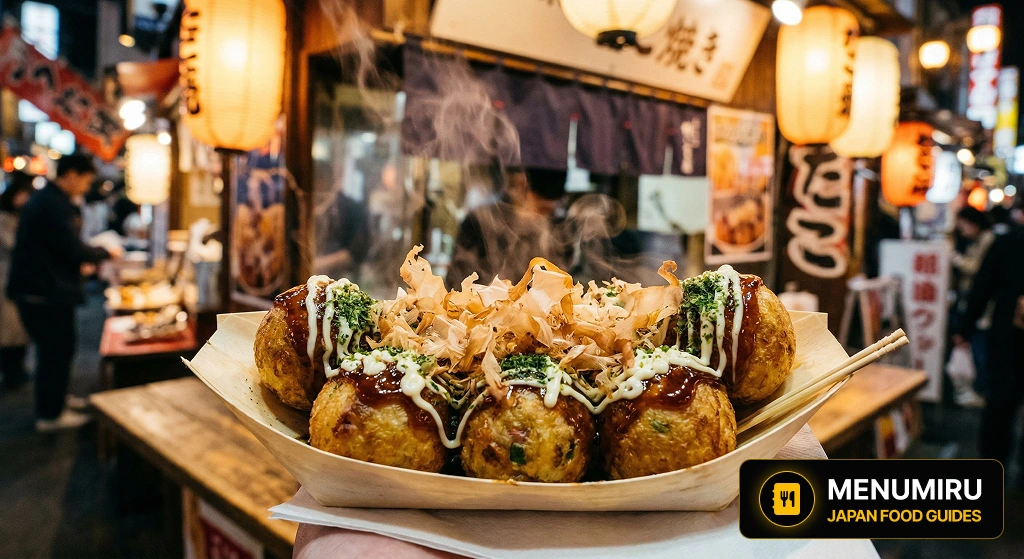
Region: Osaka · Season: Year-round
Osaka is the "kitchen of the nation" (天下の台所), and takoyaki is its most recognizable symbol.
What it is. Balls of liquid batter with a piece of octopus inside, fried in special spherical molds. Topped with sauce, mayonnaise, bonito flakes (katsuobushi), and green seaweed aonori. A crispy crust on the outside, and inside — scorching-hot, gooey, creamy filling.
Why here. Takoyaki was invented in Osaka in 1935 by a vendor named Tomekichi Endo. Osakans take takoyaki as seriously as Neapolitans take pizza — most families own a special takoyaki pan at home. This isn't just street food — it's cultural identity.
How to eat it. Carefully! The inside is scalding hot. Locals pick up a ball on a skewer and blow on it. Some places offer tastings of different sauces — classic, ponzu, mentaiko (cod roe), and salt.
Where to eat
Takoyaki Wanaka (たこ焼きわなか) — Sennichimae One of the most respected takoyaki establishments in Osaka. Google rating: 4.3 (4,100+ reviews). Made right in front of you on sizzling hot molds. Tasting sets with different flavors available. Upper floor for those who prefer to eat seated. Price: 8 pieces from ¥650. Address: 11-19 Nanbasennichimae, Namba.
Aizuya (会津屋) Considered the inventor of takoyaki — in operation since 1933. Their original recipe doesn't include sauce — the batter is so flavorful on its own that additions aren't needed. A minimalist, authentic approach.
Kukuru (くくる) — Dotonbori A photogenic shop on Dotonbori with a giant octopus on the sign. Famous for large pieces of octopus inside the balls. The perfect option for a stroll along the canal.
7. 🐟 Katsuo no Tataki (鰹のタタキ) — Kochi, Shikoku
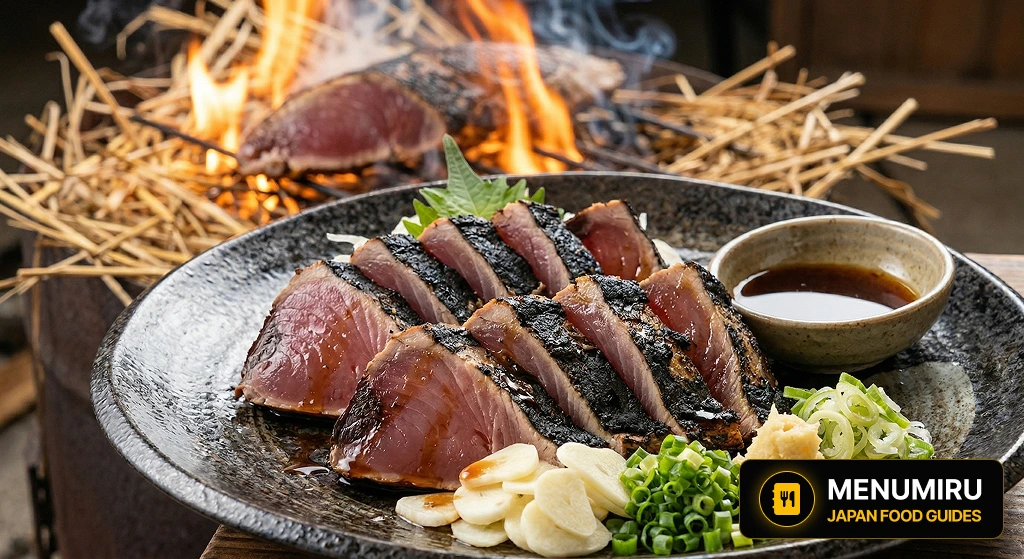
Region: Kochi Prefecture · Season: Spring–Autumn (peak: May–June and September–October)
Kochi is one of the least-known prefectures among tourists, but for food lovers, it's a true treasure.
What it is. Bonito (skipjack tuna) fillet, flash-seared over a straw fire until the outside has a caramelized crust with a smoky aroma, while the inside remains tender raw flesh that melts on your tongue. Sliced into thick pieces and served with a mountain of sliced garlic, ginger, green onion, and ponzu sauce.
Why here. The straw-fire searing method (wara-yaki) was invented by fishermen of the Tosa province (the ancient name for Kochi). After a long day at sea, they needed fast, delicious food. Straw from rice sheaves produced a brief but intensely powerful flame — ideal for instant searing. The Pacific coast of Kochi lies along the bonito migration route, so the fish here is incredibly fresh.
Two seasons. Hatsu-gatsuo (初鰹) — the first bonito of spring, leaner with a bright, clean taste. Modori-gatsuo (戻り鰹) — autumn "returning" bonito, fatty with a deep, rich flavor.
Where to eat
Hirome Ichiba (ひろめ市場) An indoor market-food court with 70 restaurants and bars where locals and tourists sit at communal tables, drink beer, and eat tataki. Google rating: 4.1 (21,000+ reviews). This is "Kochi's kitchen" — energetic, noisy, friendly. Inside the market, look for Yairo-tei — they're so proud of their tataki that they close on days when they can't source the perfect bonito. Address: 2-3-1 Obiyamachi, Kochi.
Myojinmaru (明神丸) A famous restaurant serving a bonito tasting set in several styles — with salt, with sauce, Tosa-nuta style (garlic sauce with miso), and sashimi. The perfect place to understand all the facets of bonito flavor.
Tosa Tataki Dojo (土佐タタキ道場) A unique format: here you sear the bonito over a straw fire yourself, guided by a master. Just one item on the menu — but what an item!
8. 🥩 Miso Katsu (味噌カツ) — Nagoya, Aichi
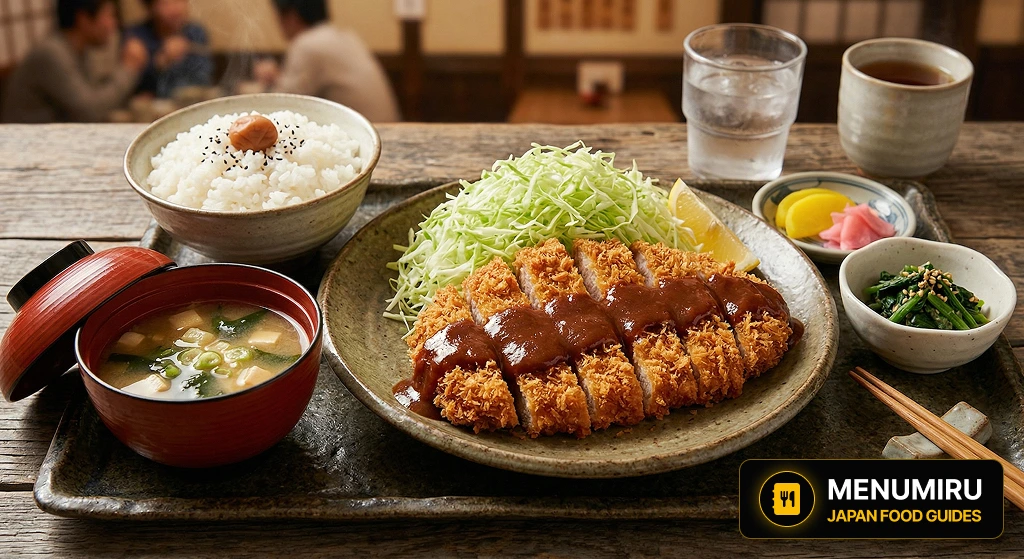
Region: Nagoya, Aichi Prefecture · Season: Year-round
Another gem of "Nagoya-meshi" — a dish that transforms the familiar tonkatsu into something entirely new.
What it is. Classic tonkatsu (breaded pork cutlet), but instead of regular sauce — a thick, dark, sweet-savory sauce made from red miso (Hatcho miso, 八丁味噌). This miso is aged for at least 1.5 years and has an incredibly deep, complex flavor — nothing like the white miso familiar from miso soup.
Why here. Nagoya is the capital of red miso. Locals joke (and it's almost true) that in Nagoya, they put miso on everything. Red Hatcho miso has been produced in the nearby town of Okazaki since the 15th century. It's saltier, more intense, and bursting with umami — a completely different product from Kyoto's white miso.
How to eat it. The thick miso sauce is poured over the katsu just before serving to preserve the crunch of the breading. At some restaurants, you can order "half and half" — one cutlet with miso sauce, the other with regular tonkatsu sauce, to compare.
Where to eat
Misokatsu Yabaton (味噌カツ矢場とん) The most famous miso katsu restaurant in Nagoya, operating since 1947. Recognizable by its mascot — a pig wearing a red sumo wrestler's belt. Their signature miso sauce is made from 1.5-year-aged Hatcho miso using a secret recipe. The menu highlight is the "Waraji Tonkatsu Set" (two enormous cutlets, rice, soup, cabbage) for ¥1,900. Branches throughout Nagoya, including the Meitetsu Department Store near Nagoya Station and the Esca underground shopping center.
Yamamotoya (山本屋) If you want to experience another side of Nagoya's red miso — order the miso nikomi udon here (noodles stewed in miso broth in a clay pot). The perfect winter lunch.
9. 🌴 Okinawa Soba (沖縄そば) & Goya Champuru (ゴーヤーチャンプルー) — Okinawa
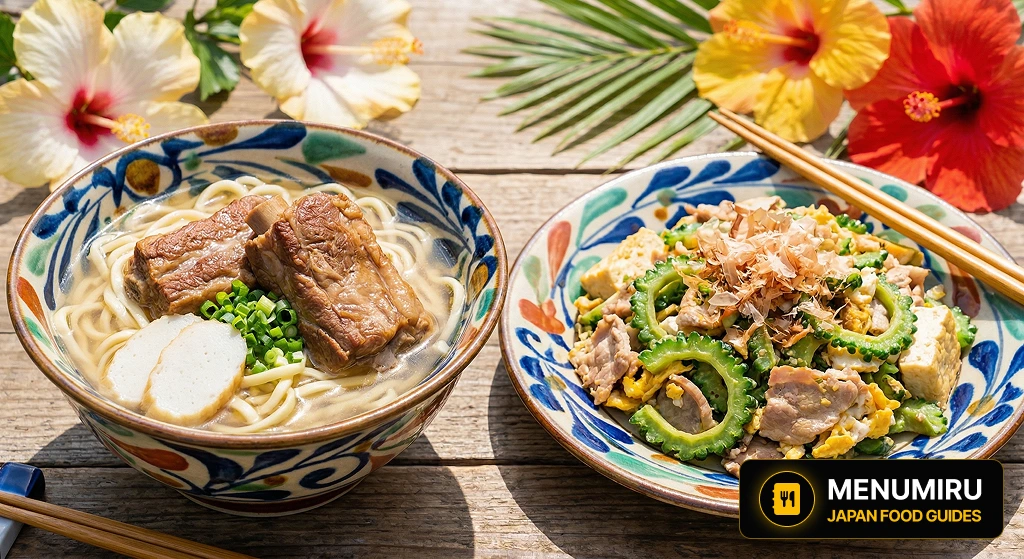
Region: Okinawa · Season: Year-round
Okinawa's cuisine is so different from mainland Japanese food that it's practically a separate gastronomic universe — with influences from China, Southeast Asia, and even America.
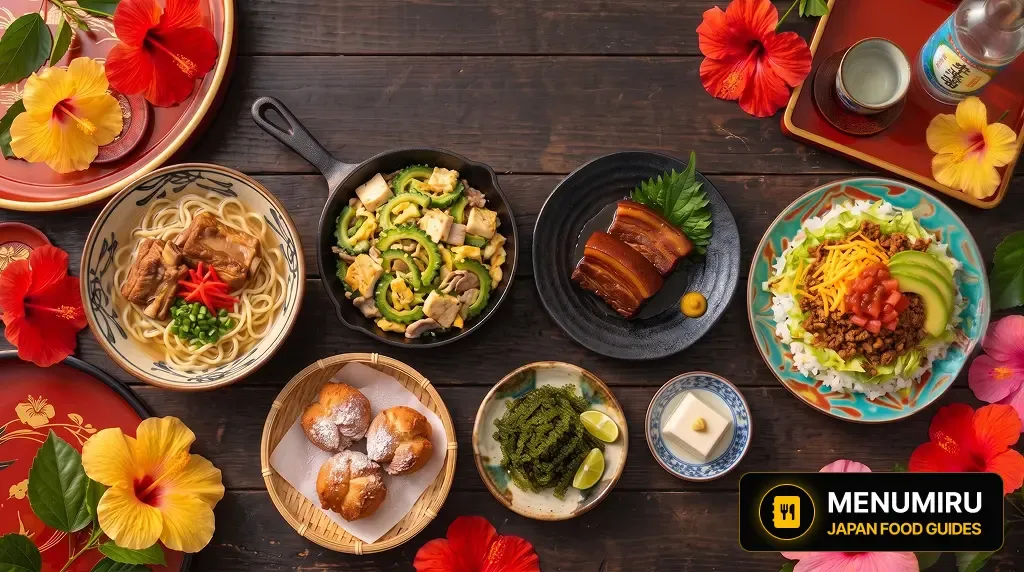
Okinawa soba — despite the name, has nothing in common with buckwheat soba. It's thick wheat noodles in a broth made from pork ribs and bonito (katsuobushi), topped with the most tender stewed pork. The most popular version is soki soba (ソーキそば), where sweet-spicy pork ribs, braised until the meat falls off the bone, are placed on top of the noodles.
Goya champuru — a stir-fry of bitter gourd (goya) with tofu, egg, pork, and spam (yes, canned meat — a legacy of the American military presence). Goya is a symbol of Okinawan cuisine, rich in vitamin C and considered one of the secrets to Okinawans' longevity.
Why here. Okinawa — the former Ryukyu Kingdom — had its own culinary tradition long before becoming part of Japan. Pork is prepared entirely differently here: rafute (pork belly braised in awamori and soy sauce) is one of the most tender meat dishes you'll ever taste.
Where to eat
Eibun (えいぶん) One of the best spots for Okinawan soba in Naha. The signature "BunBun Soba" is a generous portion with several types of braised pork (sanmai-niku, soki, seasoned meat). The broth is simmered for hours from pork bones with bonito and kombu dashi. Google rating: 4.3 (1,300+ reviews). Address: 1-5-14 Tsuboya, Naha.
Sobe Soba (そべそば) A local favorite with homemade noodles of perfect texture. The soki soba with cartilage is the signature dish, limited to 30 servings per day. The best portions are gone by noon. Google rating: 4.4 (2,400+ reviews). Cash only.
Yunanchi (ゆうなんぎい) For full immersion in Okinawan cuisine — an elegant restaurant in Naha with over 60 varieties of awamori (Okinawan distilled spirit). Goya champuru here is served on a fluffy bed of eggs, and the rafute is braised for 6 hours in nothing but awamori and Okinawan salt.
10. 🐑 Soup Curry (スープカレー) — Sapporo, Hokkaido
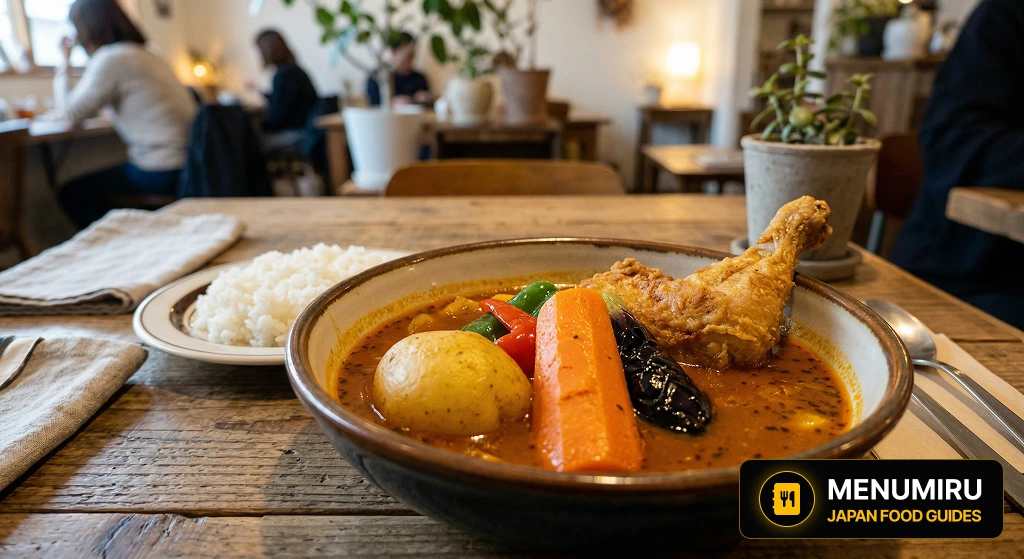
Region: Sapporo, Hokkaido · Season: Year-round (especially in winter)
Another Hokkaido invention that has become a full-fledged gastronomic phenomenon — one you won't experience in its true form outside Sapporo.
What it is. Unlike the thick Japanese curry familiar from CoCo Ichibanya chain restaurants, soup curry is a light, aromatic broth based on spices (cardamom, cumin, coriander, turmeric, and dozens more), with large-cut vegetables floating in it: potato, carrot, eggplant, pepper, and usually a large piece of chicken, pork, or Hokkaido vegetables. Rice is served on the side.
Why here. Soup curry was invented in Sapporo in the early 1970s at a café called Magic Spice, and quickly became a local favorite. Hokkaido vegetables — enormous, sweet, grown in an ideal climate — make this soup something special. Each restaurant has its own unique broth recipe — some use up to 30 different spices.
How to order. Choose your base (chicken, pork, vegetables, seafood), spice level (usually from 0 to 40+), and type of rice (white or with additions). Start with medium spice — the Hokkaido scale differs from the mainland.
Where to eat
Picante (ピカンティ) One of the pioneers of soup curry in Sapporo. A broth built on 30+ spices and Hokkaido vegetables. Multiple spice levels. A cozy, relaxed café atmosphere.
Soup Curry Yellow (スープカレーイエロー) Popular with locals, featuring a vibrant, warming broth and generous portions of Hokkaido vegetables.
Garaku (ガラク) A cult favorite, frequently featured in rankings. Their signature soup curry is built on 21 different spices, prepared over 5 days. Queues are the norm, but the wait is worth it.
How to Plan a Food-Focused Trip
Japan Rail Pass is your best friend for a regional culinary tour. With the Shinkansen, you can get from Tokyo to Nagoya in 1.5 hours, to Osaka in 2.5, to Hiroshima in 4, and to Fukuoka in 5. Hokkaido and Shikoku have separate lines.
Food budget. Many regional specialties are surprisingly affordable. Sanuki udon in Kagawa — from ¥200. Takoyaki in Osaka — from ¥500. Ramen in Fukuoka — from ¥650. Jingisukan in Sapporo — from ¥1,500 for dinner. The exception is hitsumabushi (from ¥3,000) and kaiseki.
Best time. Every season is great for different dishes, but autumn (September–November) is arguably the best period for a food-focused trip: autumn bonito in Kochi, oysters in Hiroshima, warming miso dishes in Nagoya, and fresh lamb in Hokkaido.
This article is part of a series on regional Japanese cuisine at MenuMiru. MenuMiru helps travelers in Japan navigate restaurant menus, translate dishes, and find what suits you best.