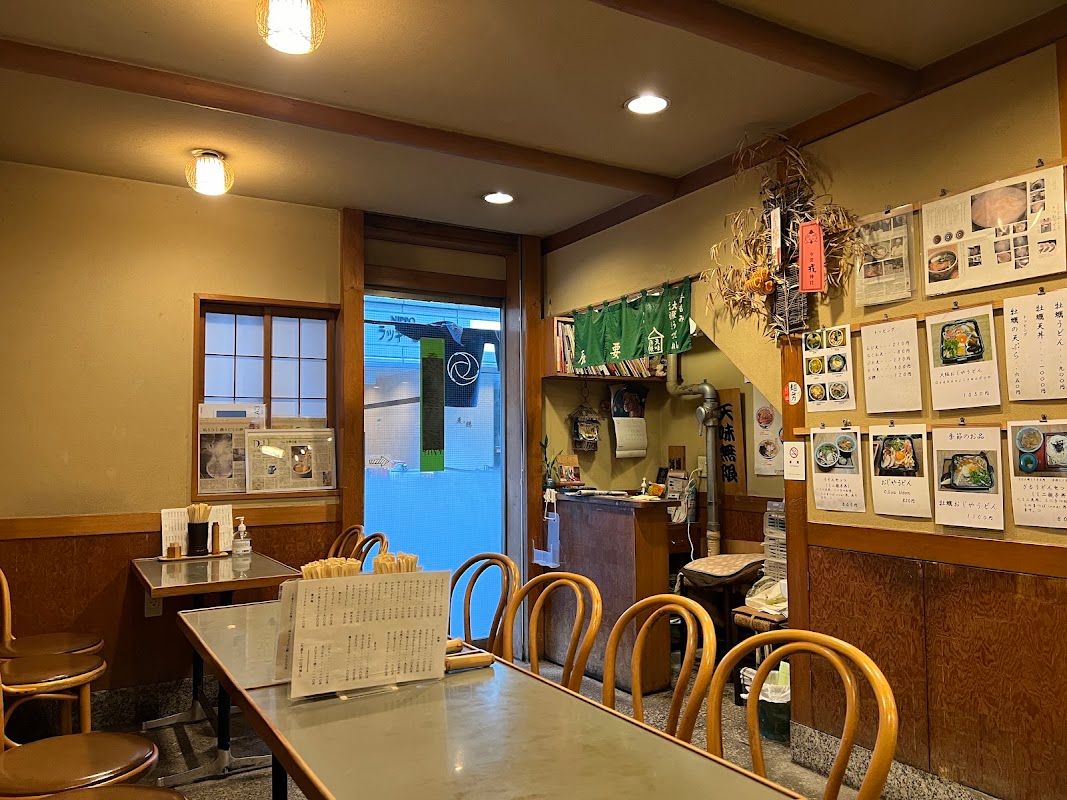
Tucked into a shopping arcade in Minami-Semba, a few minutes from Shinsaibashi, Usamitei Matsubaya has served udon since 1893 and is widely credited as the birthplace of kitsune udon. The dish began as a side plate of sweet-simmered fried tofu meant for inari-zushi; regulars kept dropping the tofu into their noodle broth until the kitchen started serving it that way from the start. The long, narrow dining room keeps a Showa-era retro feel, with overflow seating upstairs when the ground floor fills at lunch. Alongside the signature kitsune udon, the kitchen also serves the more unusual ojiya udon, noodles simmered in a small iron pot with egg, chicken, fish cake, and shrimp.
Address
3-chōme-8-1 Minamisenba, Chuo Ward, Osaka, 542-0081, Japan

Non-smoking throughoutNo reservations for regular seating (walk-in only); whole-venue buyout availableCash onlyLong, narrow Showa-era retro dining room with overflow seating upstairsBirthplace of kitsune udon50 seats
AI Assistant
Ask about dishes, ingredients, allergens, or get personalized suggestions
Menu
* The menu was scanned by a user, not uploaded by the owner. There may be inaccuracies.
Udon
Kitsune Udon
The restaurant's signature dish and the noodle considered the birthplace of kitsune udon: soft udon noodles in a slightly tangy dashi broth topped with a large piece of sweet-simmered fried tofu.
¥650
Ojiya Udon
Udon noodles simmered in a small square iron pot with a rice-porridge-like broth, egg, chicken, fish cake, fried tofu, and shrimp.
¥820
Osaka Ojiya Udon (Deluxe)
A more generous version of ojiya udon with additional seafood and vegetable toppings, simmered in the same iron pot style.
¥1,050
Tempura Ojiya Udon
Ojiya udon topped with tempura, served in the same iron pot with egg, chicken, fish cake, and shrimp.
¥1,050
Kitsune Don (Rice Bowl)
A rice bowl version of the restaurant's signature kitsune udon, topped with sweet-simmered fried tofu.
From a 1,000-year-old mochi shop in Kyoto to Edo-period tempura stalls in Asakusa, these legendary establishments have been serving the same iconic dishes for generations — some for over 500 years. Step back in time and taste history at Japan's most enduring culinary institutions.